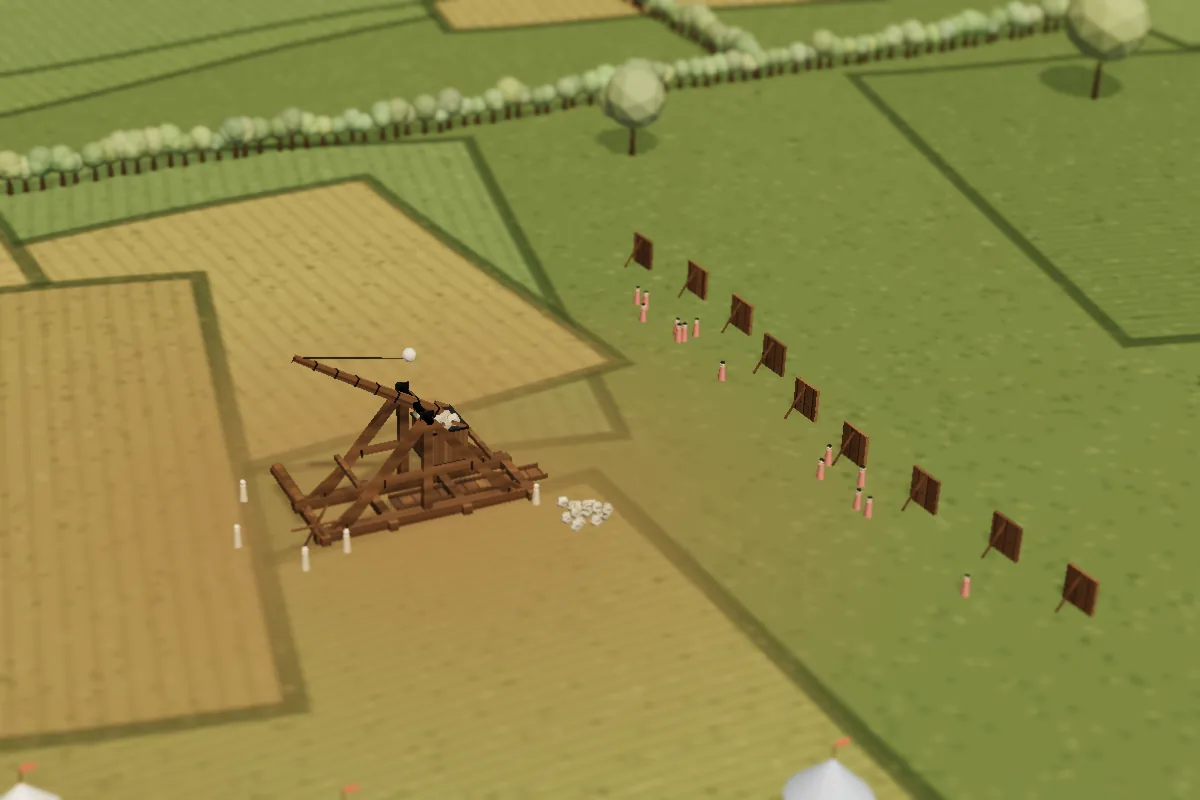
Counterweight trebuchet
A giant throwing arm swung by a falling box of earth or stones, the heaviest artillery before gunpowder.
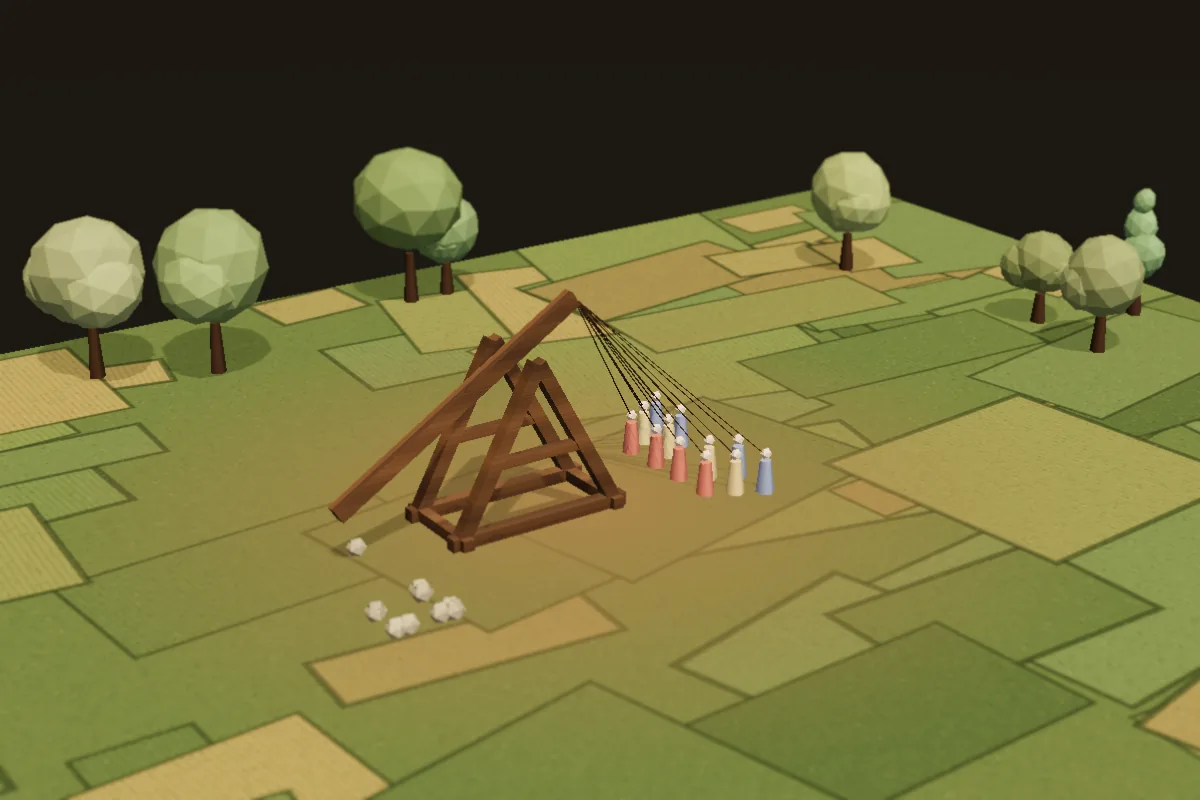
A long wooden beam pivots on a tall frame. The short end carries a huge counterweight, a box filled with earth, stones or lead; the long end has a sling holding the missile. Crews winched the long end down and locked it. When released, the counterweight fell, the arm whipped up and the sling opened at the top of its swing, hurling the stone in a high arc. Because the same weight fell the same distance every time, a counterweight trebuchet could hit the same stretch of wall shot after shot.
It was huge, slow and costly: it had to be built on site by skilled carpenters, took days to assemble and fired perhaps one or two shots an hour. It was exposed to enemy engines and sorties, and its high arc made it better for smashing parapets, roofs and buildings than for breaching thick walls at their foot. Defenders answered with their own engines and with timber frames and hides to protect the wall top.
- Projectile
- usually 50–150 kg stones; claims of much heavier ones are uncertain
- Range
- roughly 150–400 m in modern estimates and reconstructions, depending on size and load
- Counterweight
- several tonnes on the largest machines (estimates vary widely)
- Rate
- about 1–2 shots an hour for big machines, by modern estimates
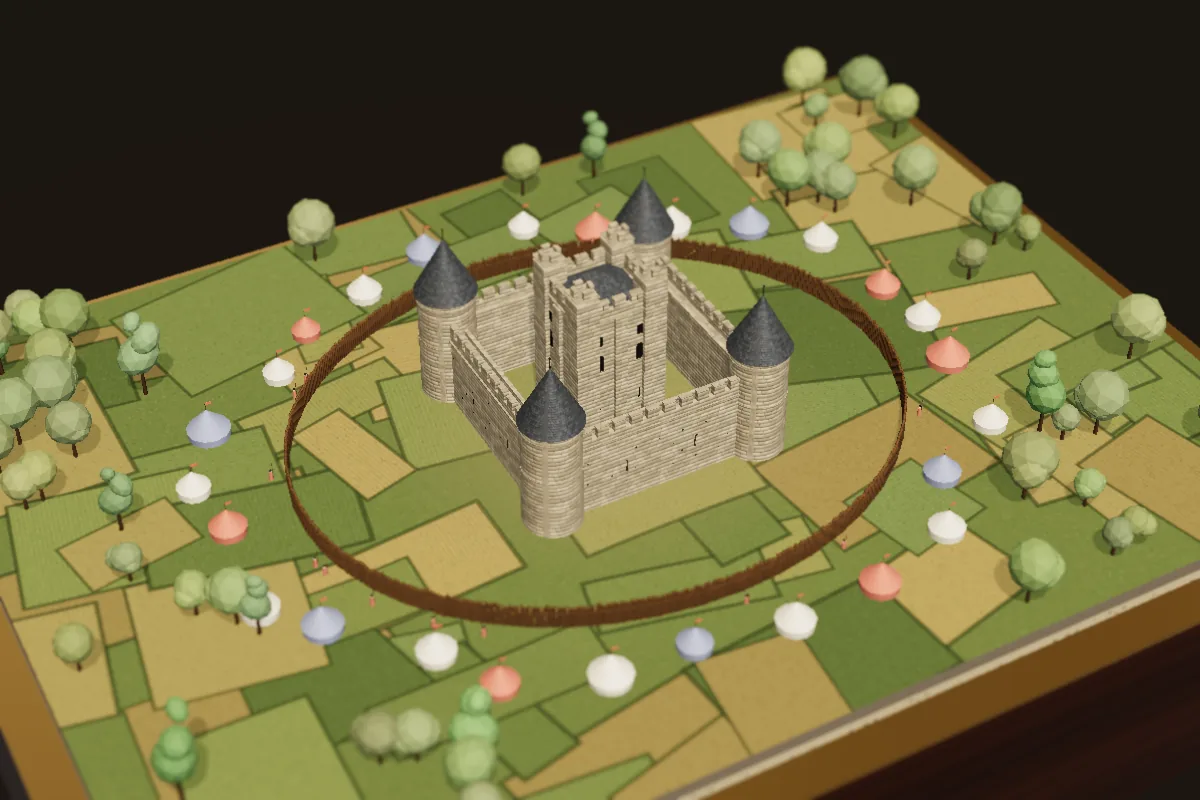
Edward I's giant 'Warwolf' at Stirling in 1304 is the most famous named trebuchet. Siege of Stirling Castle.
Work the model