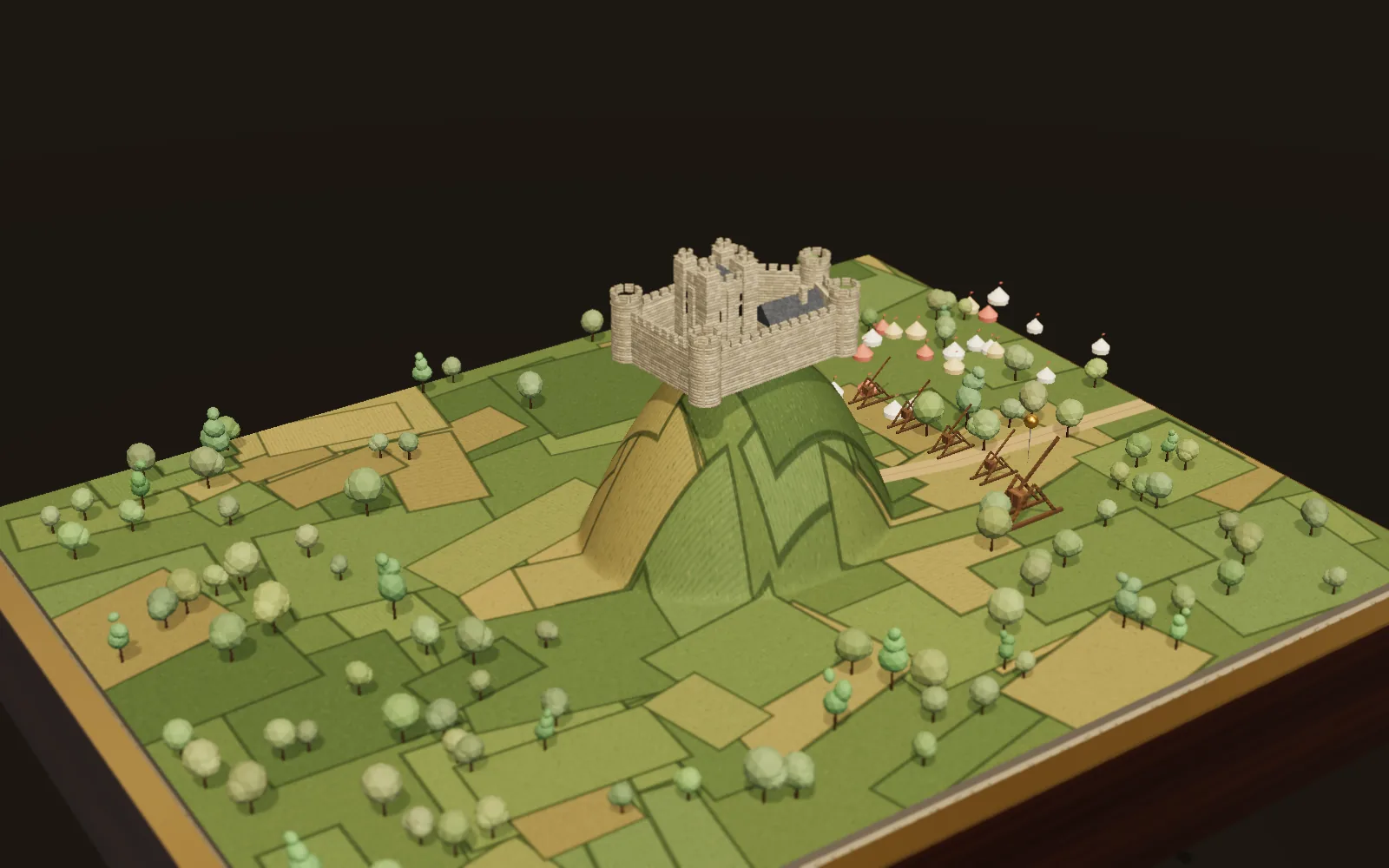
By 1304 most of Scotland had submitted to Edward I of England. Stirling Castle, on a crag of volcanic rock above the lowest crossing of the river Forth, was the last major stronghold still held for the Scots. Edward arrived in April with a large army and a formidable siege train.
Royal records show the English assembling about a dozen stone-throwing engines, some brought from other castles, with lead stripped from church roofs for counterweights. Ingredients for gunpowder and incendiary mixtures were also ordered. Day after day the engines battered the walls on the one approachable side of the rock.
The garrison was small, probably around 30 men or a little more, but the cliffs made a direct assault almost impossible. Edward had his master engineer begin a new trebuchet bigger than any before, known as the Warwolf. It took a large team of carpenters and workmen several months to build.
By July the defenders were exhausted and offered to surrender. Edward refused until the Warwolf had been tried. Chroniclers say its first shots brought down part of the wall. Only then did he accept the garrison's surrender, around 20–24 July 1304. Oliphant was imprisoned in England; the castle passed into English hands until 1314.
What is uncertain
- The Warwolf's size, stone weights and range are not recorded reliably; modern estimates are guesses.
- Sources disagree on the exact date of surrender, given as 20 July or 24 July 1304.
- Gunpowder ingredients were bought, but it is not clear how they were used; there is no good evidence for cannon at Stirling.
Why it mattered
Stirling marks the high point of the counterweight trebuchet in Britain. Edward's siege accounts are some of the best evidence we have for how such machines were built, moved and supplied. Within a few decades gunpowder weapons would begin to take their place.