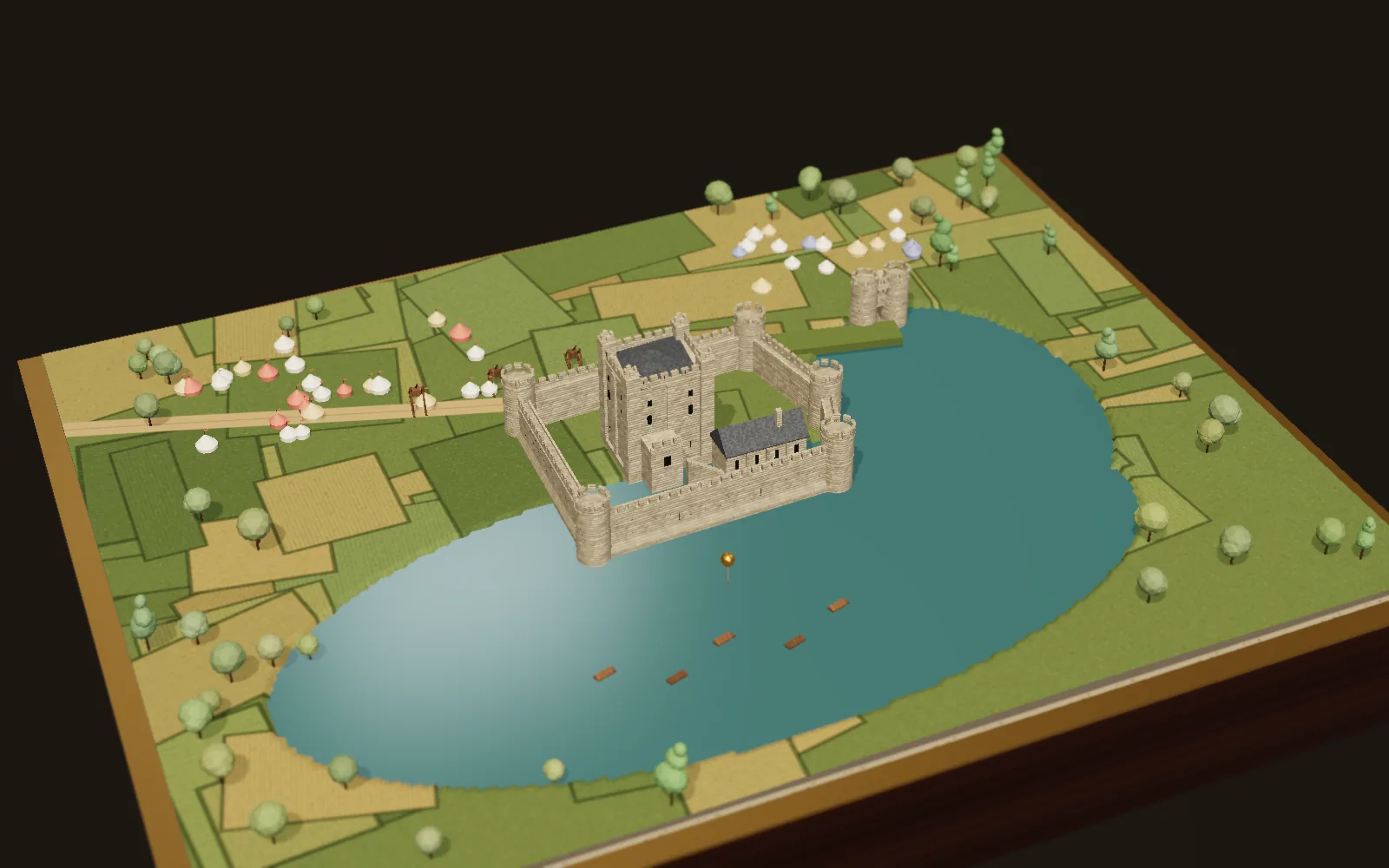
After the defeat and death of Simon de Montfort at the Battle of Evesham in 1265, his surviving supporters held out at Kenilworth Castle in the Midlands. Its great strength was water: an artificial lake, known as the mere, spread around the south and west of the castle, held back by a dam that also carried the main approach.
The royal army arrived in June 1266. They brought stone-throwing engines, but the defenders had engines of their own, and witnesses describe stones crashing into each other in mid-air. The lake kept miners away from the walls and siege towers at a distance.
The besiegers built a large wooden siege tower, said by the chronicler to hold 200 crossbowmen, but a stone from the castle smashed it. Barges were brought overland from Chester for an attack across the mere; that too failed. The defenders mocked the papal legate who had come to excommunicate them.
In the end, the king tried negotiation. The Dictum of Kenilworth, issued in October 1266, let rebels buy back their lands instead of losing them forever. The garrison at first refused, but by December they were short of food and suffering from disease. They surrendered on 13 or 14 December and were allowed to leave.
What is uncertain
- Some sources date the start of the siege to 21 June, others to the main assault on 25 June 1266.
- Numbers for the garrison are uncertain; some chroniclers give over a thousand, which may be exaggerated.
- The '200 crossbowmen' in the siege tower comes from one chronicle and may be a round figure.
Why it mattered
Kenilworth showed how water defences could neutralise the best siege techniques of the day: mining, rams and towers. It took hunger and a political settlement, not engines, to end it. The castle's lake made a deep impression, and water defences featured heavily in later castles such as Caerphilly.