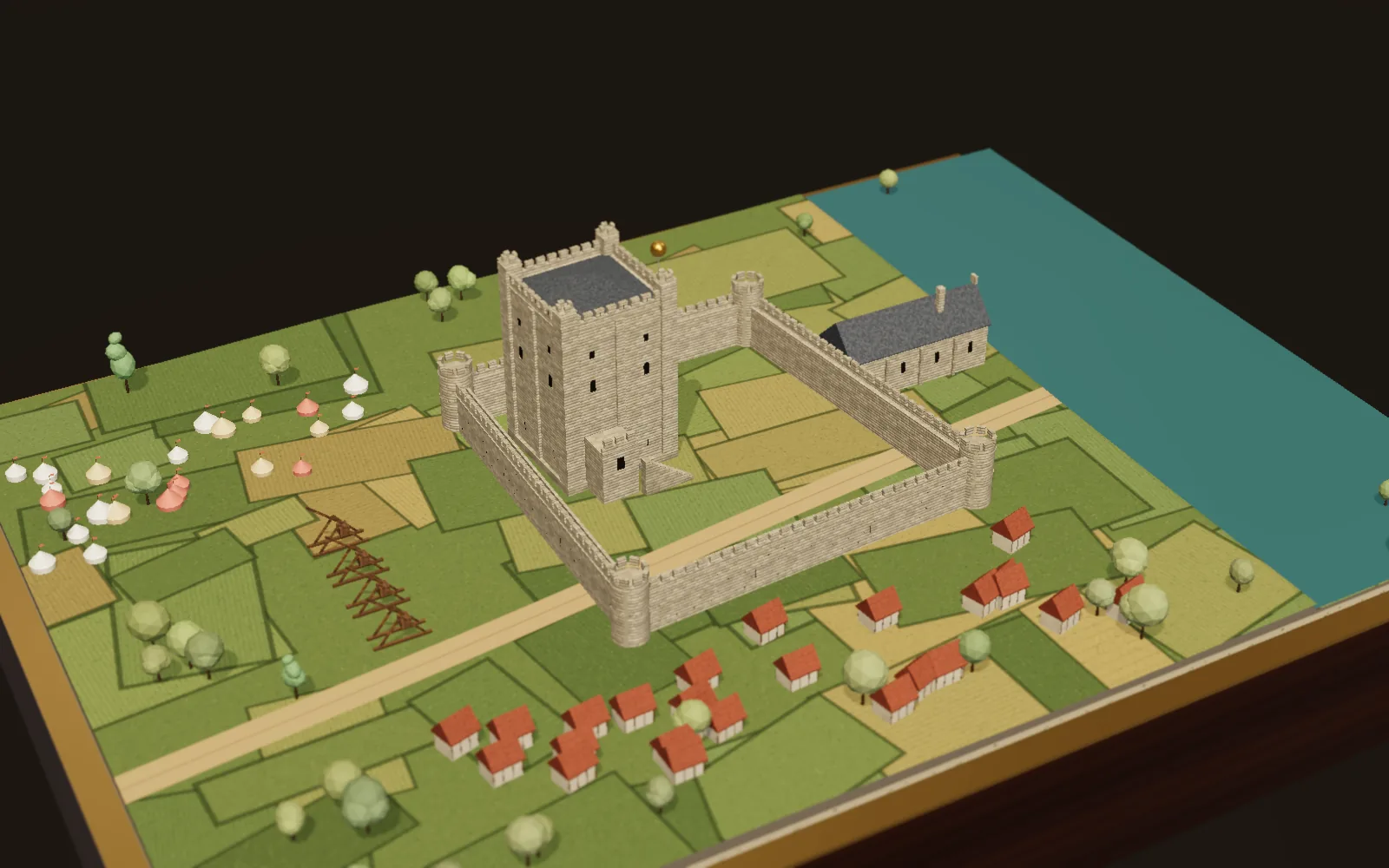
Months after King John agreed to Magna Carta in June 1215, the peace collapsed into civil war. Rochester Castle, guarding the crossing of the river Medway on the road from London to Dover, was seized by rebels. Its great square keep, built in the 1120s–30s, rises about 34 metres, one of the tallest Norman towers in England.
Royal troops arrived on 11 October 1215 and the king himself two days later. He set up five stone-throwers against the outer walls and kept them firing day and night. The bridge over the Medway was broken to stop help arriving from London, and the rebel barons there never came. After the outer walls were breached, the garrison withdrew into the keep.
The king's miners then dug beneath the south-east corner of the keep. On 25 November John sent a writ to his justiciar, Hubert de Burgh, ordering forty of the fattest pigs, 'of the sort least good for eating', to be sent to fire the mine. The burning fat set the timber props ablaze, and the corner of the tower collapsed.
Even then the defenders fought on behind the thick cross-wall that divided the keep in two. Only when their food ran out did they surrender, on 30 November. John is said to have wanted to hang them all; he was persuaded to spare most, though at least one crossbowman was hanged.
What is uncertain
- The writ about the forty pigs survives in the royal records, but whether exactly that number arrived and were used is not recorded.
- Garrison size is uncertain: estimates suggest around 95 to 140 knights plus crossbowmen and other soldiers.
Why it mattered
Rochester shows the power of mining against square towers. When the keep was repaired in the 1220s, the fallen corner was rebuilt as a round turret, and it is still easy to see today, a lasting record of why castle-builders moved from square to round.