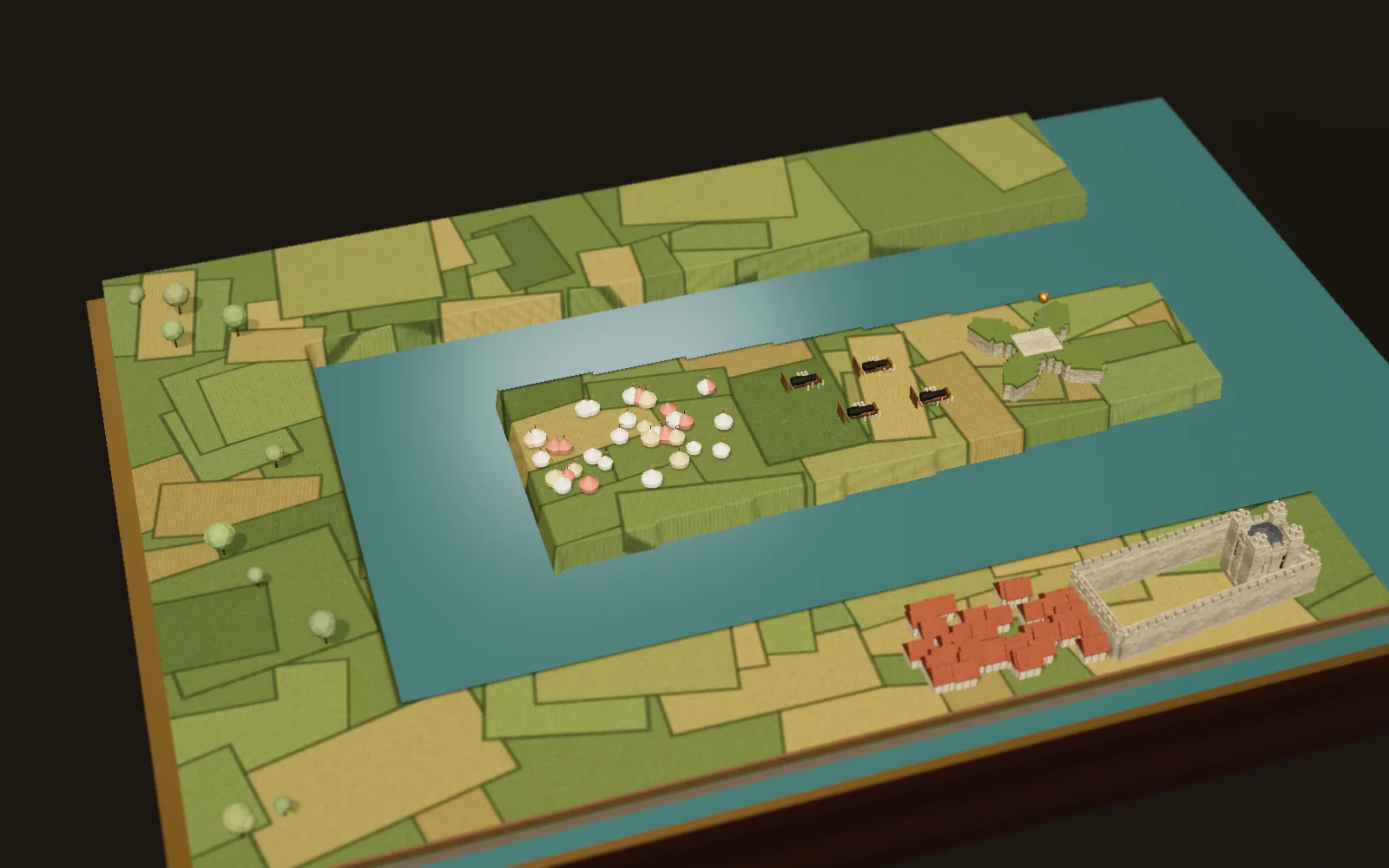
The Knights Hospitaller, a military religious order, had been driven from Rhodes by the Ottomans in 1522 and given Malta by the Spanish king. From its harbours they raided Ottoman shipping. In 1565 Sultan Suleiman the Magnificent sent a huge fleet and army to destroy them.
The Ottomans landed in May and chose first to attack Fort St Elmo, a small star-shaped fort at the tip of the peninsula between the island's two great harbours. They expected it to fall in days. Under constant bombardment from guns on the heights above it, and reinforced by night from across the harbour, its garrison held out for about a month. It fell on 23 June, with almost all its defenders killed. Dragut was mortally wounded during the siege.
The Ottomans then turned on the two fortified peninsulas of Birgu and Senglea, defended by Fort St Angelo and Fort St Michael. For two summer months they bombarded the walls, dug mines and launched huge assaults. At one point a siege tower was destroyed by defenders who opened a hole in the wall at its foot and fired cannon straight through it.
Both sides suffered terribly from heat, disease and casualties. On 7 September a Spanish relief force, the Gran Soccorso, landed in the north of the island. The exhausted Ottomans, short of supplies and with the sailing season ending, re-embarked and sailed away.
What is uncertain
- Numbers are uncertain: the Ottoman force is put at roughly 22,000 to 48,000, the defenders at roughly 6,000 to 9,000 including about 500 knights.
- Accounts of atrocities by both sides, such as bodies floated across the harbour or heads fired from cannon, come from chroniclers writing to praise the defence and are hard to check in detail.
Why it mattered
Malta showed how well bastioned fortresses with interlocking fire could hold out against a powerful artillery army. Afterwards the knights built Valletta, a fully planned bastioned city on the peninsula where Fort St Elmo had stood, one of the finest examples of the trace italienne.